Connecting to networks
Tiaki Wai amalgamated with Wellington Water on 1 July 2026 and is the new organisation delivering water services across Wellington, Hutt, Porirua and Upper Hutt cities. This website is being updated to reflect this change, but some content remains in the name of Wellington Water and is subject to ongoing review.
If you are constructing a new house or building, undertaking a subdivision or changing the use of a building (such as from residential to commercial) then you may need to connect new private drinking water, wastewater and stormwater pipes to or from the public network. New works may also require disconnections from the three water networks.
Depending on the type of project or subdivision being undertaken, the Regional Standard for Water Services requirements, your Building Consent, or your Resource Consent conditions will guide you on the type of connection(s) you will need.
Transition to Tiaki Wai
You will continue to apply for new water, wastewater, and stormwater connections through the council where your property is located.
Over time, Tiaki Wai will move to a single, regional process. Businesses will be kept up to date as this work progresses.
For now, please read the information and find the application form relevant to your council below, under the question How do you apply for approval for new connections to the networks?
How do you know if there are capacity issues that may affect new connections to the network?
Each section of the existing drinking water, wastewater and stormwater networks was designed and built to service expected levels of development and standards of the time they were built.
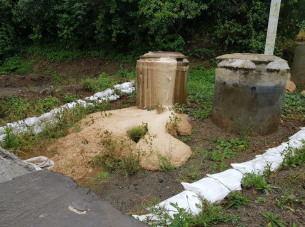
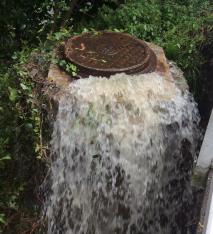
In some areas demand on a network is now greater than the network was designed for or service levels have changed. The network you wish to connect or discharge to (or network downstream of this point) may have capacity constraints or issues that may affect your ability to make a direct connection.
|
|
When considering new connections to the three waters networks you should contact the Wellington Water Land Development team for information regarding potential issues and requirements.
Please email the Land Development Team at land.development@wellingtonwater.co.nz with the following information:
- Address of the site or property for the new connections.
- Works being considered:
- new house(s) or building(s);
- addition/s to existing buildings; and/or
- subdivision and number of lots.
- Network(s) to be connected to: drinking water, wastewater and stormwater.
The Land Development team will then get back to you about any known issues and network restraints that may affect your project, and provide guidance on the next steps and requirements. An example is that in order to connect to a wastewater network with known capacity constraints you may need to achieve wastewater control.
How do you find out about flooding in an area?
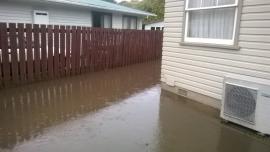
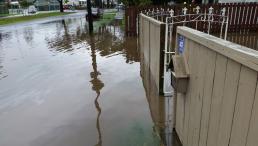
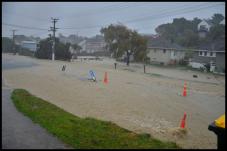
Stormwater pipes are limited in their capacity and ability to deal with extreme events. Because some stormwater pipes and watercourse can sometimes only cope with smaller events, there may be areas that flood during heavy rain events. To avoid the risk of flooding houses or damaging properties, it is important to understand the risk of flooding on your site.
|
|
|
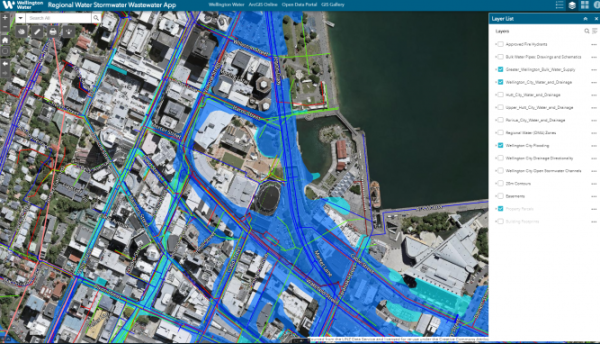
The risk of flooding or flood hazards for some areas can be found through The Regional Water Stormwater Wastewater App. Currently some information is available for Wellington City, Johnsonville, Karori and Tawa, and Porirua. These areas have been identified through modelling or historical flooding incidents. Other areas will be added as modelling is completed.
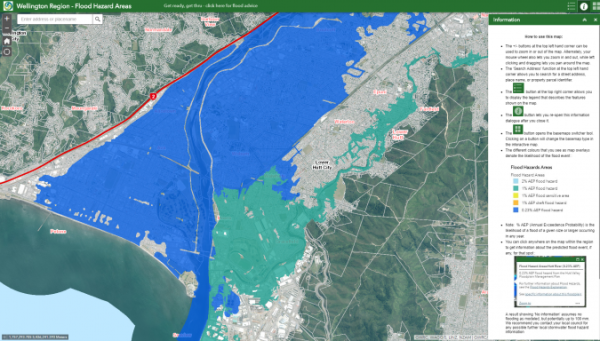
The Greater Wellington Regional Council Flood Hazards Mapping Site contains all publicly available flood hazard information for rivers and streams in the Wellington Region.
Floor levels of a building are a critical flood protection mechanism and minimum floor levels may apply at your site. Some areas may have overland flow paths that must not be blocked or constricted. It may also be that the effects of development on stormwater discharges within these areas need to be managed for stormwater neutrality.
Please contact the Wellington Water Land Development Team at land.development@wellingtonwater.co.nz for advice on minimum floor levels and if stormwater control/stormwater neutrality is required.
How do you apply for approval for new connections to the networks?
Applications and payment to connect or disconnect to the public water supply, wastewater or stormwater networks are made through each Council and then processed by Tiaki Wai.
Specific applications to connect to the network are needed even if you have already applied for or obtained a Building Consent or Resource Consent. Please be aware that alterations and new plumbing and drainage work will likely require that you are granted a Building Consent before you start work and before making an application to connect to the network. If in doubt, you should speak with the Building Control Team at the Council where the work is proposed to be located.
Note Tiaki Wai does not recommend that residential property owners apply to have a water meter installed ahead of the Tiaki Wai water metering programme. Read more on the Water Meters page
Application information
Wellington City
Visit the Wellington City Council website to apply and pay. You can also download the relevant forms below
Porirua City
Visit the Porirua City Council website to apply and pay. You can also download the relevant forms below.
Hutt City
Visit the Hutt City Council website to apply and pay. You can also download the relevant forms below.
Upper Hutt City
Please download and complete the relevant form below and return to Tiaki Wai by email land.development@tiakiwai.co.nz. An invoice will be issued by Upper Hutt City Council.
Application forms
- Tiaki Wai water supply service connection application form
- Tiaki Wai drainage (stormwater and wastewater) connection application form
- Tiaki Wai public drainage permit application form
In addition to a completed and signed application form you will be required to provide the following information:
- Building consent or resource consent number
- Name and contact details for your drainlayer/plumber
- A plan showing the proposed works/site
For any enquiries, please contact the Tiaki Wai Land Development team at land.development@tiakiwai.co.nz.
Water service bylaws
The water service bylaws set rules to manage, regulate and protect the water supply, wastewater and stormwater networks. Applications for connections to the network and trade waste (and other activities) are made under these bylaws.
Hutt City Council, Porirua City Council, Upper Hutt City Council and Wellington City Council have delegated administration and enforcement of the following Water Service Bylaws to Tiaki Wai.
Hutt City Council
Hutt Valley Trade Wastes Bylaw 2016
Water Supply Bylaw 2022
Porirua City Council
Stormwater (Pollution Prevention) Bylaw 2021
Trade Waste Bylaw 2021
Water Supply Bylaw 2025
General Bylaw 1991 (Part 25) Wastewater
Upper Hutt City Council
Hutt Valley Trade Wastes Bylaw 2016
Water Supply Bylaw 2022
Wellignton City Council
Wellington Trade Waste Bylaw 2016
Water Services Bylaw 2024
Fees and charges
Fees and charges are set in the Tiaki Wai Pricing Policy and shown in the table below.
Water connection
A standard application to connect to Tiaki Wai networks generally comprises the following fees:
- An application fee (to administer a new connection application)
- Fee for Tiaki Wai to approve and supervise the connection
- Water shutoff fee to enable the connection (if required)
- Installation costs are paid directly to an approved contractor.
| Service | Upper Hutt City | Hutt City | Wellington City | Porirua City |
| Water Connection Application Fee (per connection) |
$149.00 | $149.00 | $149.00 | $149.00 |
| Water Shutoff Fee (if required) The cost of water shutoff to allow for installation or disconnection of a service pipe. |
$670.00 | $670.00 | $670.00 | $670.00 |
| Water Service Fee (per connection) The cost of Tiaki Wai approval and supervision necessary to affect the connection. |
$153.00 | $153.00 | $153.00 | $153.00 |
- Water Connection Installation - The customer shall engage and pay an approved contractor to supply, install and make the connection to the main water supply network.
- Termination of Water Supply The customer shall engage an approved contractor for the removal of a meter / disconnection / termination of the water supply. The water shutoff fee may also be applicable.
Water meters
| Service |
Upper Hutt City | Hutt City | Wellington City | Porirua City |
| Water Meter Application Fee (per meter) |
$65.00 | $65.00 | $65.00 | $65.00 |
| Water Meter Reading (outside of quarterly reading) |
$104.00 | Included in water service charges | Included in water service charges | Included in water service charges |
Water Meter Installation
- The customer shall engage an approved contractor to supply and install the meter, and the installation must comply with Tiaki Wai requirements.
- An independent test certificate for the meter may be required
- Note Tiaki Wai does not recommend that residential property owners apply to have a water meter installed ahead of the Tiaki Wai water metering programme. Read more on the Water Meters page.
Processing of Application
Once an application is forwarded to Tiaki Wai by Council it will generally take up to 3 weeks to be processed.
Approved applications will contain a set of conditions that must be complied with, including requirements for inspection and as-built drawings.
Physical Connections to the water supply network
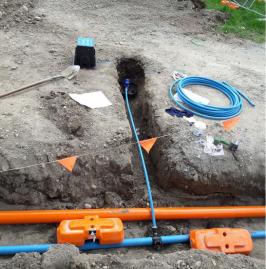
Following approval of your application to connect to the water supply network, it is your responsibility to engage an approved contractor to do the physical connection.
- List of approved contractors
- For new water connections for residential properties your contractor will need to install a new water manifold (toby) when installing a new water connection to the public water supply main
- For new water connections for commercial properties your contractor will need to install a new water meter and a backflow preventor.
How are physical connections to the drainage networks done?
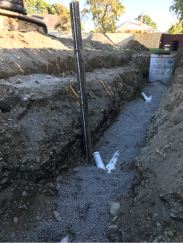
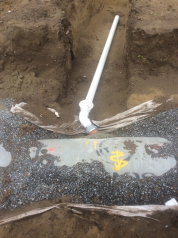
For new connections to the drainage networks in Hutt City, Upper Hutt City, Porirua City and South Wairarapa the physical connections to the drainage system must be undertaken by a registered drainlayer, and inspected by Wellington Water. It is your responsibility to engage a registered drainlayer to do the physical connection and arrange for Wellington Water to undertake the required inspections.
For new connections to the drainage networks in Wellington City a registered drainlayer constructs the new pipework to and exposes the main or connection point, but the physical connection to the public wastewater and stormwater networks is made by Wellington Water. It is your responsibility to engage a registered drainlayer to do the physical works up to but not including the connection and arrange with Wellington Water to undertake the required connection works and inspections.
|
|
Avoid cross-connections!
Unfortunately, a common mistake with residential plumbing and drainage works is connecting wastewater (sewer) pipes into stormwater pipes or stormwater pipes into the wastewater system. This is known as cross connecting and it can result in serious adverse effects on public health and the environment.
-
A common source of cross connections is a downpipe diverted into the gully trap (a drainage vent usually covered with a small grating and located against the outside of a house, near the kitchen, laundry or bathroom).
-
Stormwater in the wastewater network increases the volume at the treatment plant by up to five times dry-weather levels. It can overload the plant, leading to a discharge to sea of only partially treated water.
-
Wastewater connections to stormwater pipes have an equally harmful impact. Due to a faulty connection or leaks, wastewater can overflow and end up in the stormwater system, which transports directly into our streams, rivers and the sea.
-
One way to help keep our streams, coast and harbours clean for generations to come is to ensure there are no cross connections on your property, as they are illegal.
The two networks are separate, and it is the property owner’s responsibility to ensure they stay that way. Make sure you and your tradesperson connect the right pipes to the right network.


